I work where simulation research meets real products. My first company was WellDone Games, a small mobile game studio. After that I spent four years shipping real-time rendering for DCS World, a flight simulator played by hundreds of thousands of people, and then did my PhD research at KIT on neural rendering (thesis defense still ahead), where my work earned a Best Paper Honorable Mention at Eurographics 2025.

Since then I've worked on generative video and world models at Meta Reality Labs and Stability AI, and founded Acc3D, which turned my rendering research into a product for the gaming industry. I'm excited about simulating worlds, both for entertainment, games and video, and for training robots. What drives me is real impact: models that leave the paper, run in real time and get used.

SemanTok · Stability AI · 2026

Predictable Semantic Tokens for Efficient Autoregressive Video Generation

Mikhail Dereviannykh, Vikram Voleti, Simon Donné, Mallikarjun B. R. Reddy, Shimon Vainer, Mark Boss

Video world models such as NVIDIA's Cosmos Predict use fixed-length tokenizers, spending the same number of tokens on a static shot as on a busy scene. SemanTok makes video tokens flexible and meaning-first: every token prefix already carries what the clip shows, so a generator can stop early and stay faithful.

tokens
/ frame
41664256 201M 2.29B 201M
VideoFlexTok vs. SemanTok on “A small orange basketball on a plaid tablecloth”: SemanTok keeps the ball's shape from 4 tokens per frame.
47× smaller model, better semantic alignment 3.4× smaller model, same or better video fidelity +11–24% image fidelity at equal size
Selected research

2026

Efficient Validation for LLM-Generated Rendering Optimizations

M. Dereviannykh, D. Klepikov, H. Brucker, D. Wüst, B. Krimmel, R. Dolp, C. Dachsbacher · KIT

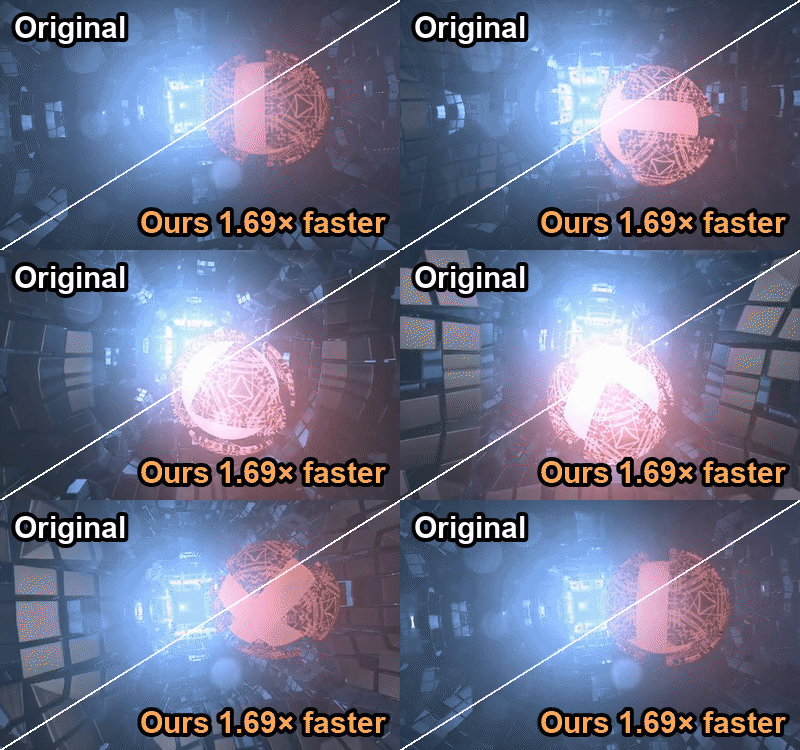
LLM-driven evolutionary search finds shader and render-pass speedups (up to 2.19×); a Bayesian sequential test proves them safe with 47–85% fewer validation frames. Basis for Acc3D.

Project pagePaper soon
RenderOpt: original vs. ours, 1.69× faster
2026

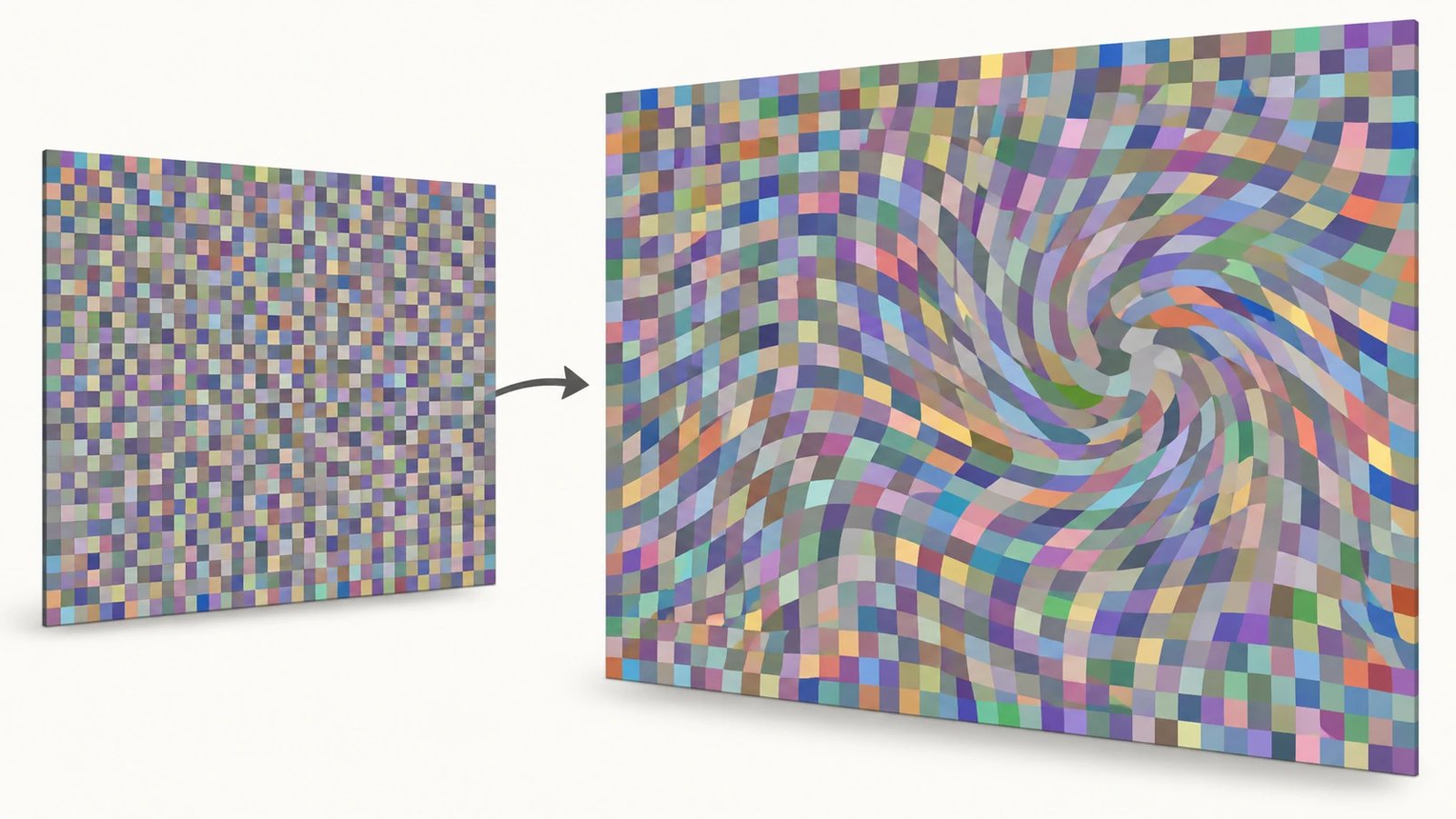
Tabula Rasa: Monte Carlo Estimation of Unit-Variance Noise with Controlled Spatio-Temporal Correlation

T. Ritschel, Y. Zhou, N. Milef, M. Dereviannykh, C. Liu, C. Hery, C. Marshall · SIGGRAPH Asia 2026 · Meta

To appear
Tabula Rasa teaser
2026

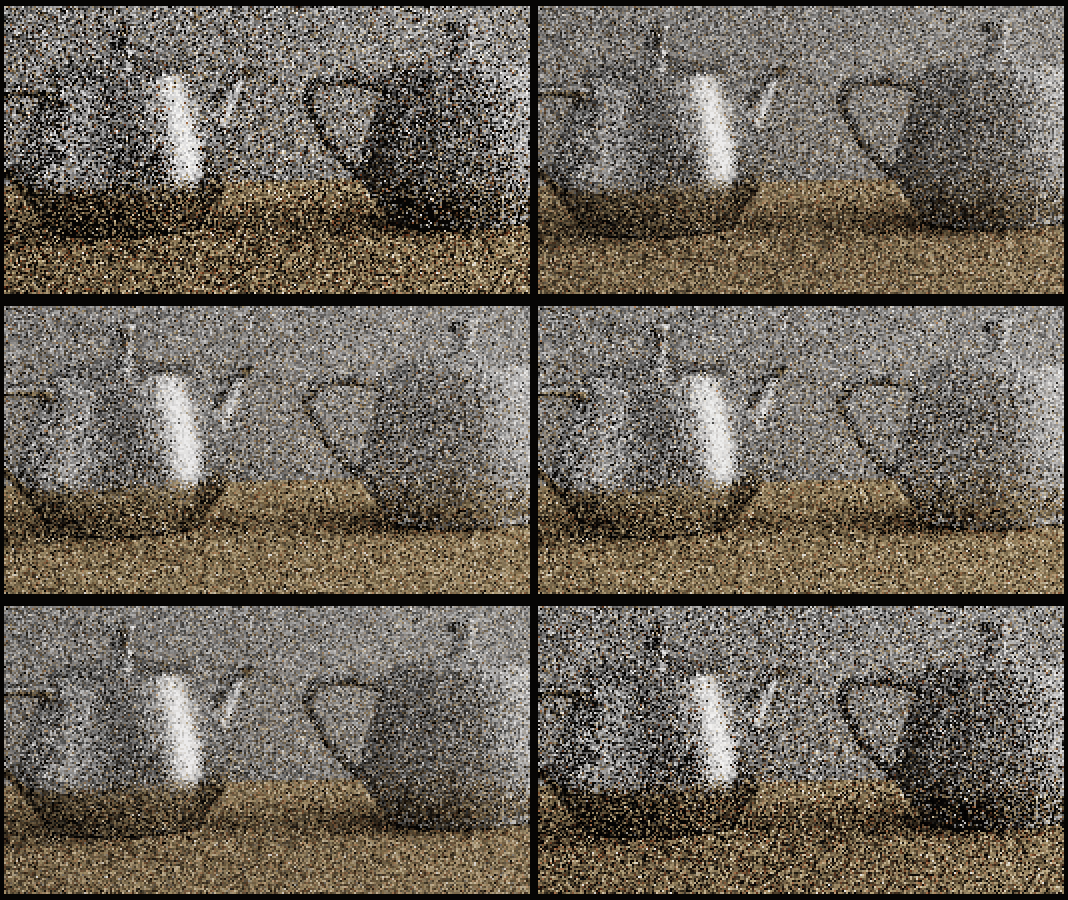
On Cosine Prior Distributions for Neural Path Guiding

J.-L. Gutsch, M. Dereviannykh, J. Hanika · Eurographics 2026

Light-transport priors help normalizing flows learn path-guiding distributions faster and more accurately. Supervised student project.

Neural path guiding teaser
2026

Perceptual Level of Detail Generator

Supervised by D. Klepikov & M. Dereviannykh · Calcuflow

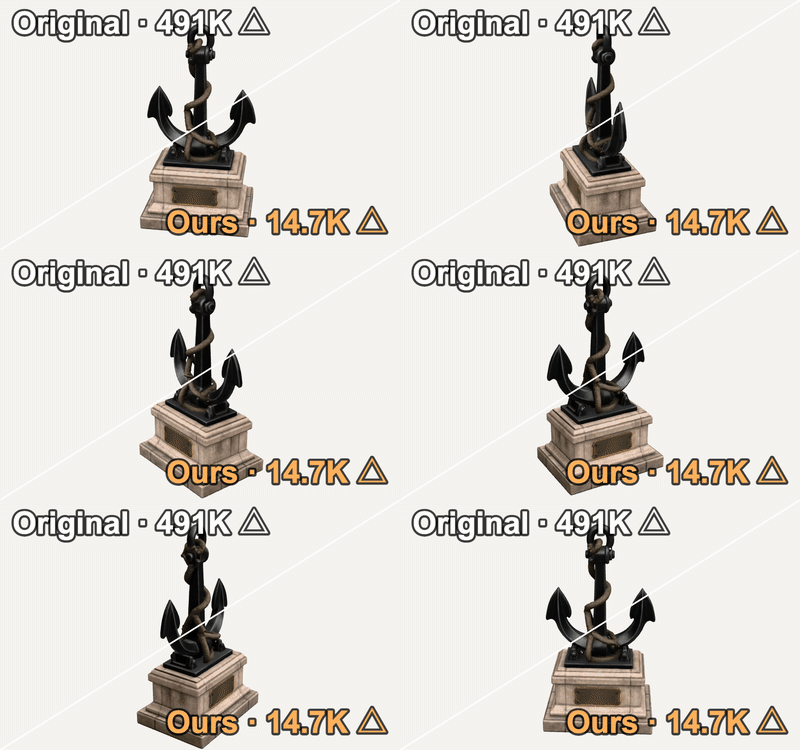
Builds LOD chains for textured, rigged 3D models, optimizing every level for perceptual fidelity: FLIP against renders of the source. At the same triangle count, its error is 3.3× lower than Blender Decimate's.

Original 490,931-triangle model vs. our 14,728-triangle LOD, diagonal split, orbiting camera
2025

Neural Two-Level Monte Carlo Real-Time Rendering Best Paper HM

M. Dereviannykh, D. Klepikov, J. Hanika, C. Dachsbacher · Eurographics 2025, CGF · presented at SIGGRAPH 2025

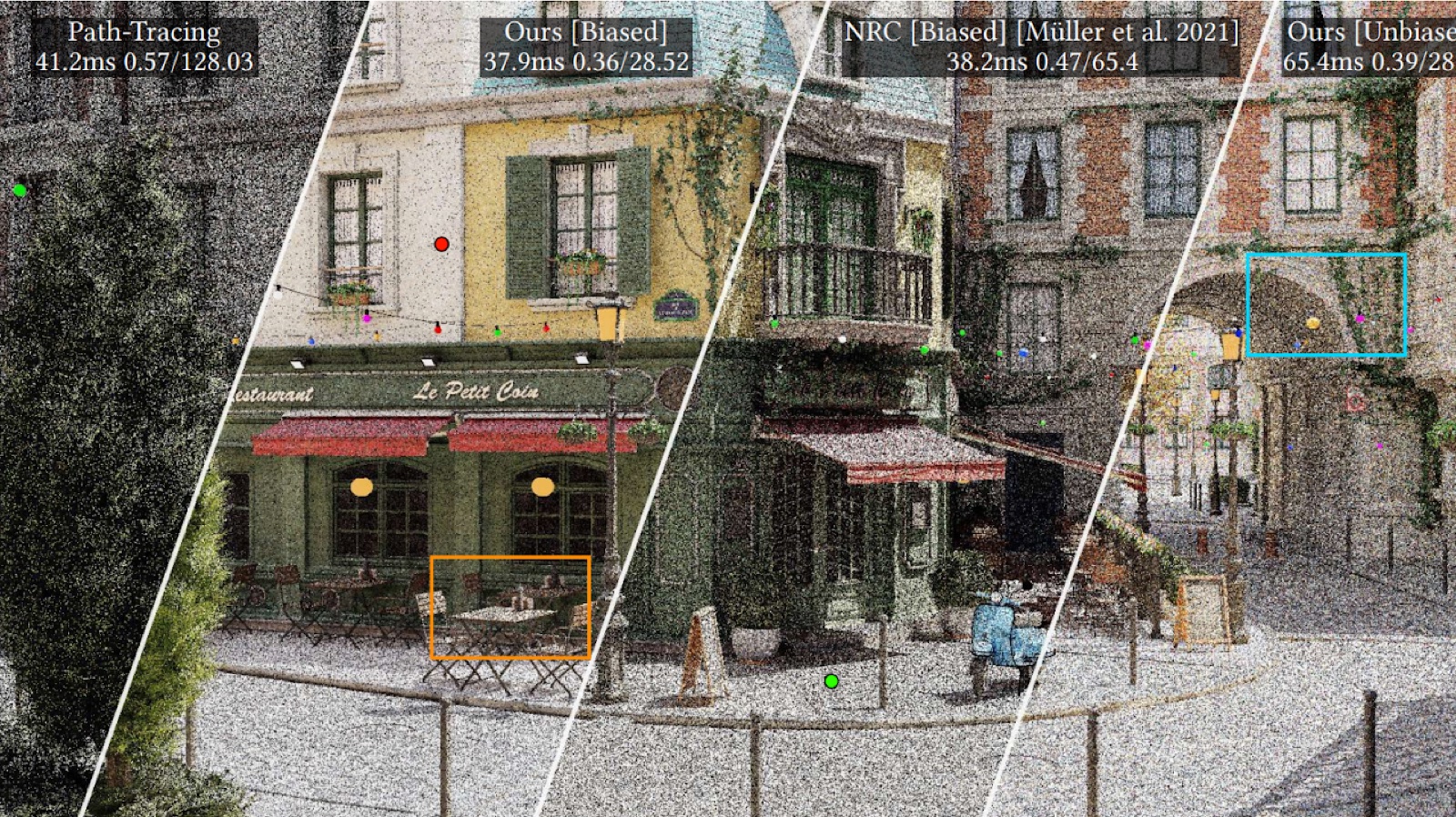
Neural Incident Radiance Cache: integrate over a network instead of tracing paths, kept unbiased with two-level Monte Carlo. Trains faster than neural control variates and saves ray-tracing work.

NIRC teaser
2022

Real-Time Path Guiding Based on Parametric Mixture Model

M. Derevyannykh · Eurographics 2022

First lightweight screen-space path guiding for real time: 4× lower FLIP at 1 spp, under 1.5 ms at 1080p on an RTX 2070.

Real-time path guiding teaser
2021

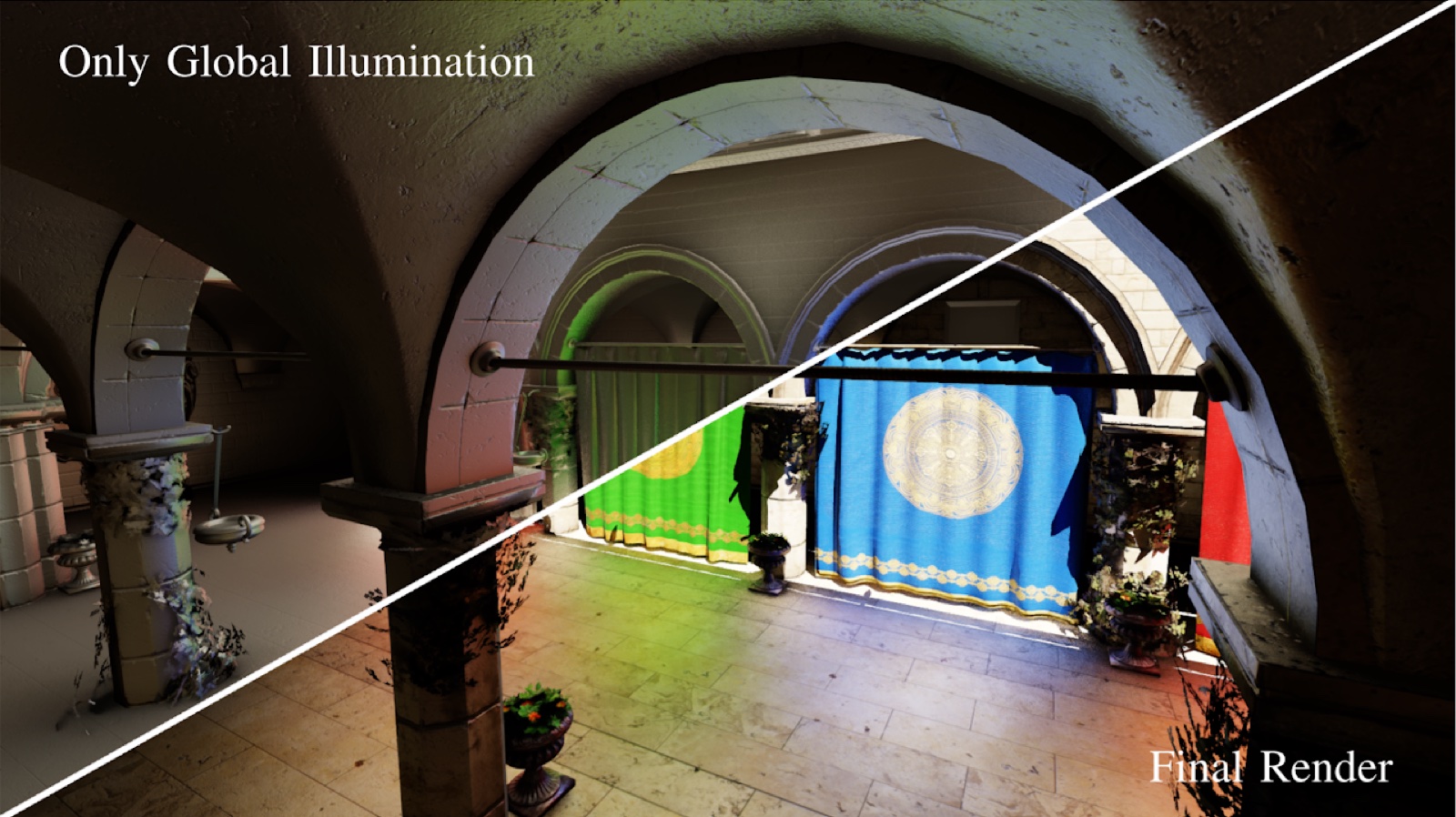
Stochastic Spherical Gaussian Radiance Volumes for Production Real-Time Rendering

M. Derevyannykh · Technical report

Precomputed light volumes with stochastically filtered spherical Gaussians, visibility weighting against leaks, and improved Fresnel and masking terms under SG lighting.

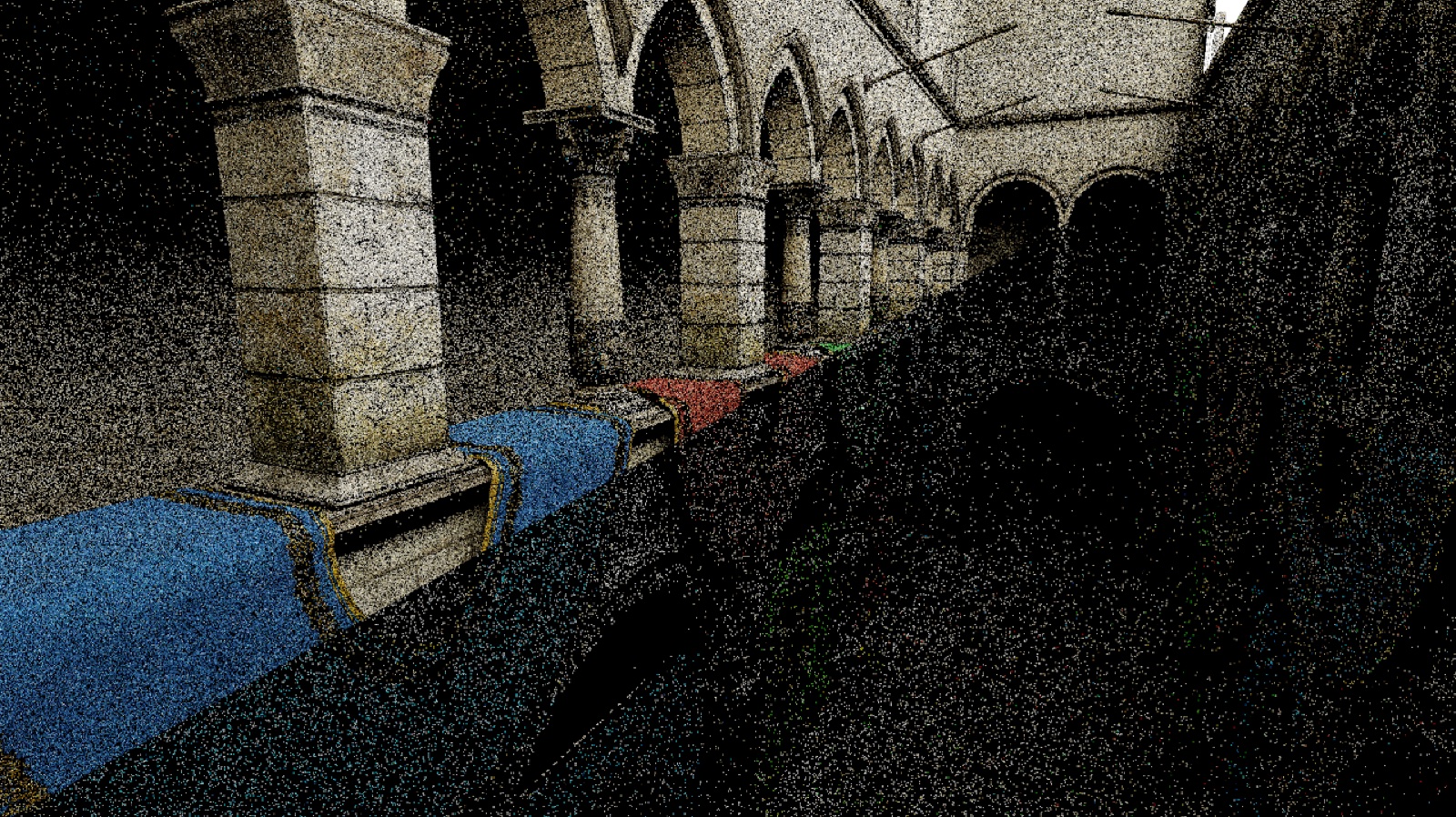
Spherical Gaussian radiance volumes in Sponza
2020

Neural Lightmaps and Light Volumes for Static Scenes

M. Derevyannykh · University project

CNNs predict a lightmap or SG light volume from dynamic light inputs in one feed-forward pass: about 1 ms on an RTX 2060.

Experience

2026–

Physical AI & World Models

Stealth

2026

Research Scientist, World Models · Stability AI

Internship. Neural Rendering and World Models

2025

Founder & CEO, Acc3D

Turned RenderOpt research into a product: automatic, verified GPU shader optimization for game engines and 3D content pipelines

2025–26

Research Scientist, World Models · Meta Reality Labs

Internship, Redmond, USA. Neural Rendering and World Models

2022–26

PhD Researcher · Karlsruhe Institute of Technology

Computer Graphics group, Prof. Carsten Dachsbacher. Thesis defense pending. Supervised student projects; designed exam sections for Computergrafik.

2021–22

Researcher · MSU Graphics & Media Lab

Real-time global illumination and neural graphics

2018–22

Senior R&D Graphics Engineer · Eagle Dynamics

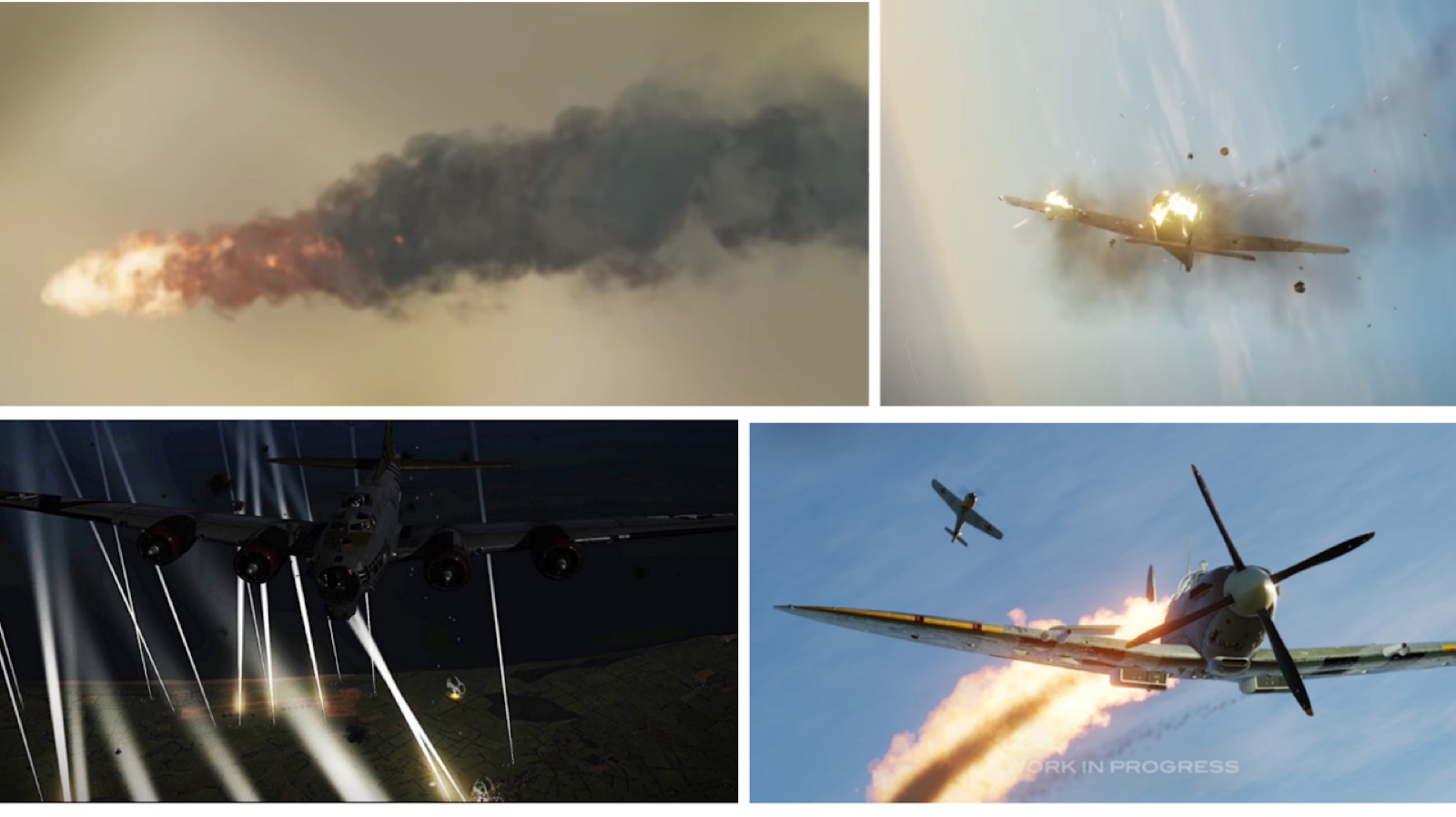
DCS World flight simulator. Neural real-time GI with 0.1 ms updates, PBR volumetrics, VFX and particle editor, engine profiling with Nsight and VTune

DCS World visual effects
2015–17

Founder & CTO · WellDone Games

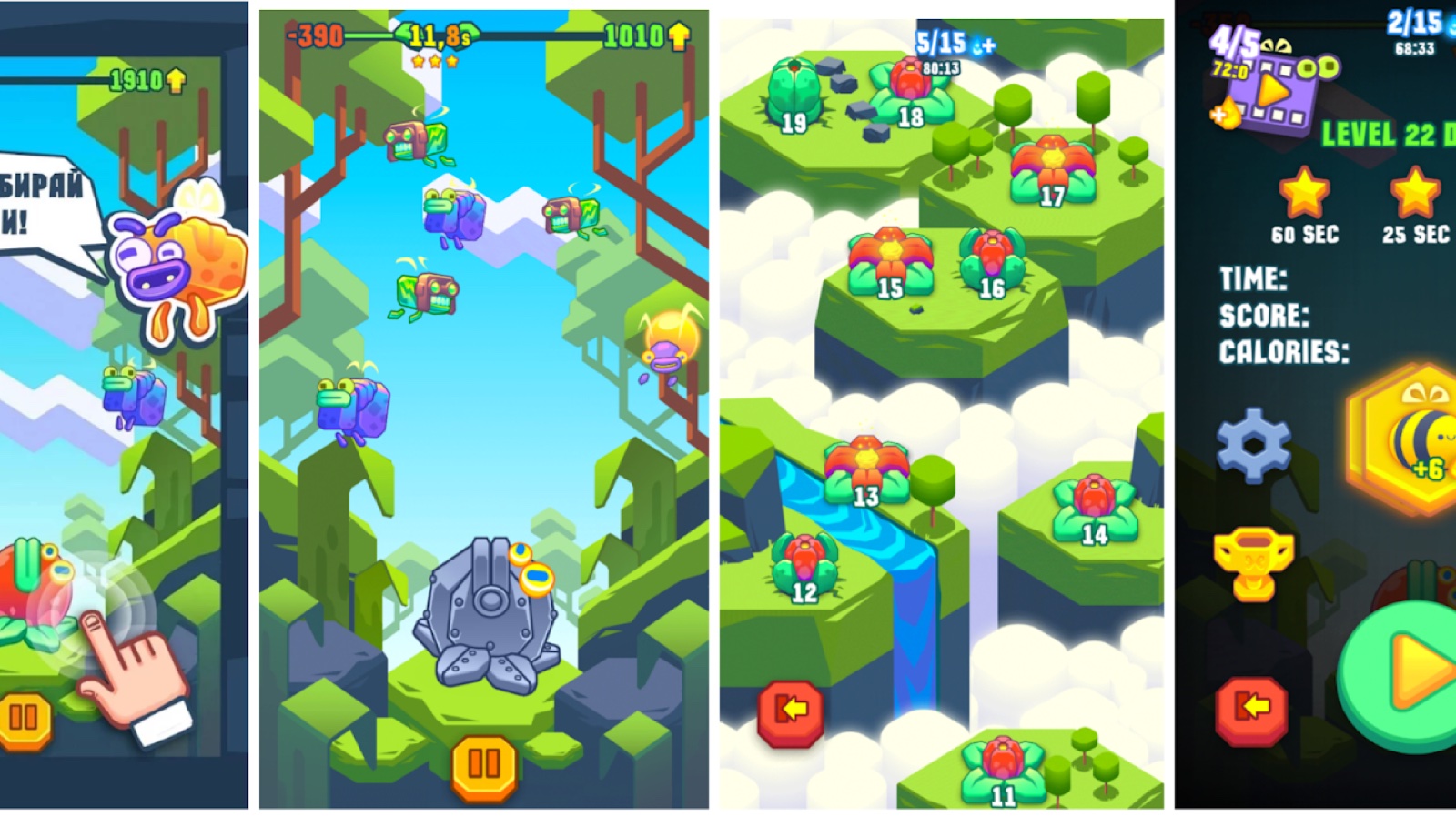
Independent mobile game studio. Shipped Hungry Jump on Android: 100 levels, AI-driven creatures, data pipeline over 1M+ logic cells

Hungry Jump gameplay

Recognition

  • 2025Best Paper Honorable Mention, Eurographics
  • 2025Meshy Fellowship, Outstanding Prize

Talks

  • 2025Neural Two-Level Monte Carlo Rendering · SIGGRAPH, Eurographics
  • 2022Real-Time Neural Graphics · Intel GPU Research
  • 2022Real-Time Path Guiding · Eurographics

Proudly worked with

Tobias Ritschel (UCL), Anton Kaplanyan (Meta, NVIDIA, Intel), Dario Seyb (Meta, Valve), Carsten Dachsbacher (KIT), Johannes Hanika (KIT, Weta Digital), Mark Boss and Shimon Vainer (Stability AI, Unity), and many others.